Turkey's Climate Change Policy is Being Formulated
Turkey submitted its Nationally Determined Contribution (NDC) to the United Nations Framework Convention on Climate Change (UNFCCC) Secretariat on September 30, 2015.
Dec 29, 2023
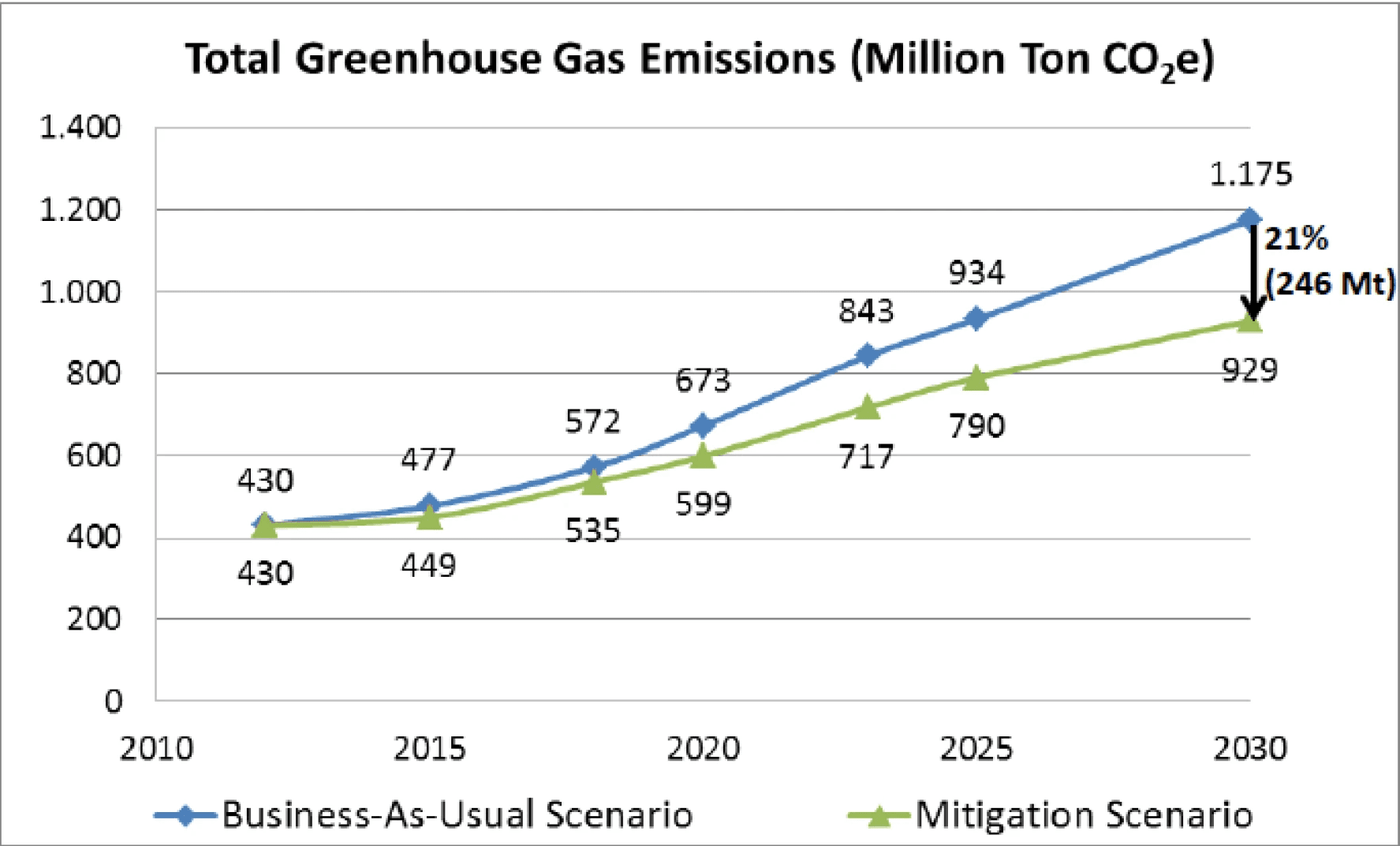
Turkey submitted its Nationally Determined Contribution (NDC) to the United Nations Framework Convention on Climate Change (UNFCCC) secretariat on September 30, 2015. Accordingly, Turkey aims to reduce greenhouse gas emissions, projected to be 1,175 MtCO2e in 2030 based on the reference scenario (BAU), by 21% to 929 MtCO2e. To achieve this target, it has set goals such as increasing solar power capacity to 10 GW, wind capacity to 16 GW, utilizing all hydroelectric capacity, bringing one nuclear plant online, reducing electricity transmission and distribution losses to 15%, ensuring energy efficiency in industry, and sustainable transportation.
Firstly, I see Turkey setting at least one target for climate change as an important step. However, of course, the determined policy brings along many discussions. Among these, the most important is the estimated 2030 emissions based on the identified reference scenario. Without knowing the mathematics behind the prediction, criticisms of the final number will remain limited. However, until the Paris climate talks and during the discussions, it seems that the question that will most challenge Turkey will be this one. In this article, I will try to interpret what this means in light of the data we have and the commitments made to achieve reductions, rather than discussing the accuracy of the 2030 forecast and reduction target.
According to TÜİK data, Turkey’s greenhouse gas emissions have nearly doubled from 1990 to 2011 (218.2; 432.5). Looking at the reduction target scenario, Turkey predicts that it will maintain this rate of increase, meaning that from 2012 to 2030 (464.2; 929), greenhouse gas emissions will double. Additionally, according to TÜİK data, per capita greenhouse gas emissions have increased from 3.96 tons/person in 1990 to 6.04 tons/person in 2013. Based on the reduction target and TÜİK population projections, this number is expected to reach 10.50 tons/person in 2030. Compared to projections from other countries, this suggests that Turkey will rank just behind the US and China in 2030.
Moreover, the NDC does not specify whether Turkey's emissions will peak in 2030 before beginning to trend downward or whether they will continue to rise after 2030. In this context, it could be assumed that Turkey might have a target to increase emissions after 2030. In other words, Turkey has not set a peak point for its emissions.
When looking at the commitments Turkey has made to achieve reductions, the first noticeable goal is for renewable energy. Because according to the Turkey National Renewable Energy Action Plan published by the General Directorate of Renewable Energy, which has not even been a year since its publication, the wind target set for 2023 has been reduced from 20 GW to 16 GW and postponed to 2030. Additionally, instead of utilizing the potential for solar energy, which is easier to construct and operate and is seen as more environmentally friendly, there is a target for using all of the controversial hydroelectric capacity. The fact that only issues related to industry and energy efficiency, which are among the NDC targets, have been mentioned without any numerical or concrete policy goals is also one of the controversial topics. Another important point is that Turkey has stated that it might be able to reach its 2030 targets using carbon certificates from international markets and mechanisms. This means that if reductions cannot be achieved, compensatory reductions might also be among the plans.
While I consider it important that Turkey, which has remained silent on climate change for years, has at least set one target, I believe that it can be further developed with the issues mentioned above. I do not think this situation applies only to Turkey. Because when evaluating the INDCs presented so far, it can be seen that the 2°C target has still not been achieved. According to the Climate Action Tracker’s publication, the INDCs presented so far indicate that we are at levels of 2.7°C, which exceed the global target of 2°C. While a 0.4°C improvement compared to Lima is noted, we are still above the critical level. We will see how all this analysis and the INDCs will reflect in the COP21 Paris negotiations and Turkey's position in these discussions.