


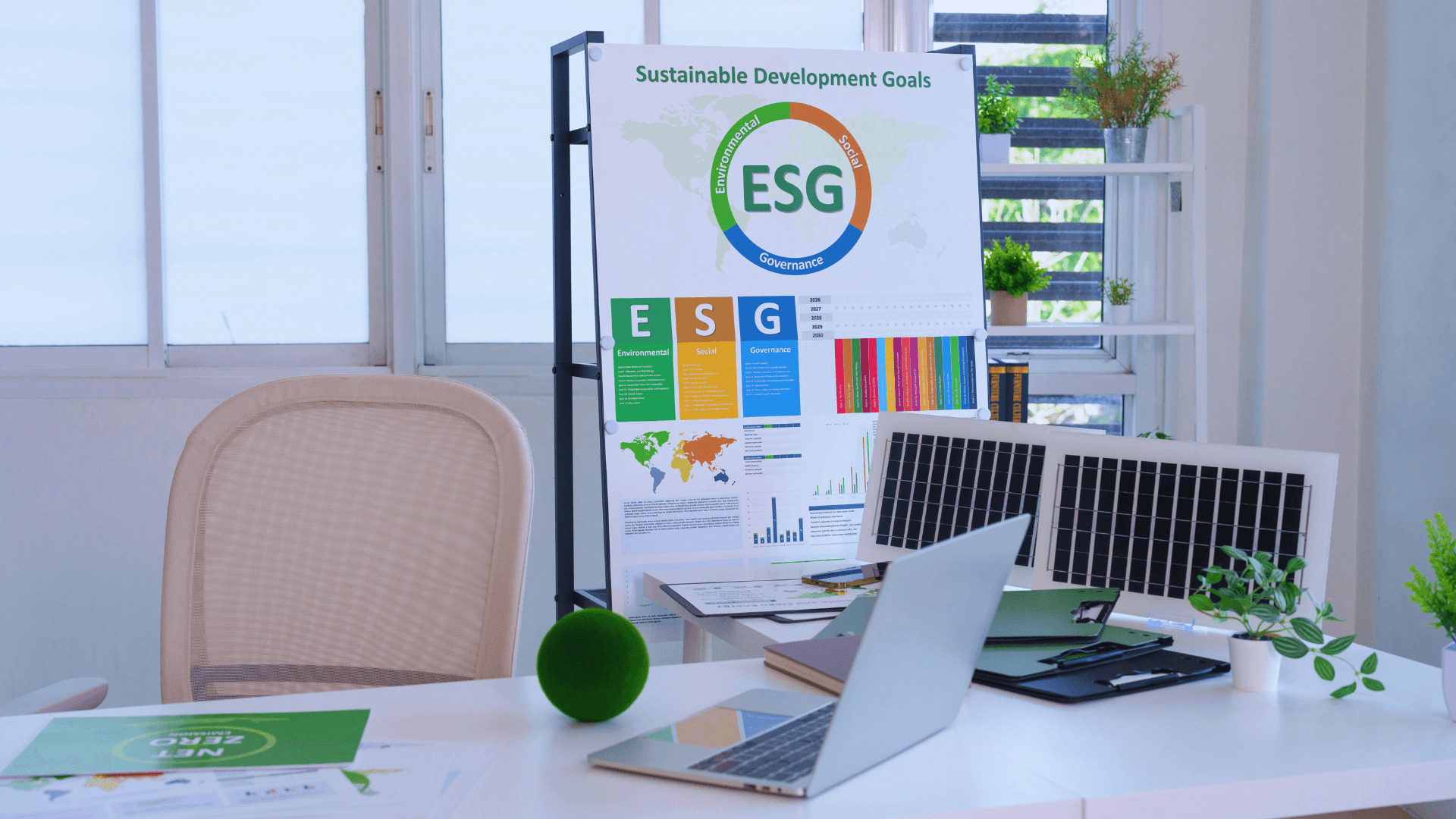
Based on the global IFRS S1 and S2 frameworks, these new UK Sustainability Reporting Standards (UK SRS) effectively treat carbon emissions as a liability and climate risk as a potential balance sheet impairment.
For the past decade, corporate sustainability reporting has largely lived in the realm of "Corporate Social Responsibility" (CSR), a narrative exercise often disconnected from the hard numbers of the Annual Report.
The incoming UK Sustainability Reporting Standards (UK SRS) fundamentally alter this relationship.
Based on the global IFRS S1 and S2 frameworks, these new standards effectively treat carbon emissions as a liability and climate risk as a potential balance sheet impairment. This shift marks the end of "saving the planet" as a marketing narrative and the beginning of audit-ready financial disclosure.
For Finance Directors and Audit Committees, the challenge is no longer about storytelling; it is about data connectivity.
The "Connectivity" Trap in Corporate Reporting
The most significant hurdle in the transition from voluntary TCFD reporting to mandatory UK SRS is the requirement for "connected information."
In our recent experience implementing the parallel TSRS standards (the Turkish adoption of IFRS S1/S2) for the 2024 reporting cycle, we found that "connectivity" was the single biggest point of failure during assurance.
The disconnect typically occurs between two distinct internal languages:
Sustainability teams often calculate "avoided emissions" or theoretical 2050 scenarios.
Finance teams require concrete "cash flow at risk" and current-year impairment test assumptions.
When verifiers requested the methodology linking these two datasets, the process frequently stalled. If your sustainability report claims a factory is at high risk of flooding (physical risk), but your financial statement does not adjust the "useful life" of that asset, you have created a material contradiction.
3 Strategic Steps to "Financialize" Your Sustainability Data
To ensure your organization is ready for UK SRS compliance, you must bridge the gap between engineering data and financial accounting.
Step 1: Redefine Your Materiality Threshold
You must move from "impact materiality" (how your company affects the environment) to financial materiality (how climate risks affect your company's cash flows).
Under IFRS S2, if a climate risk does not have a reasonably estimable value attached to it over the short, medium, or long term, it may not belong in your primary financial disclosure. This rigorous filtering process is critical to avoid "cluttering" the annual report with non-material data that distracts investors.
Step 2: Unify Your Data Dictionary
Inconsistencies in terminology are a red flag for auditors. Ensure your engineering and accounting teams define key terms identically.
Does the sustainability team’s "phase-out date" for a high-carbon asset match the depreciation schedule in the ledger?
Are you using the same carbon price assumptions for your Scope 3 modeling as you are for your financial planning?
In our work with TSRS, we found that simple discrepancies here led to significant delays during the external assurance process.
Step 3: Involve the Audit Committee Early
Do not wait for the final report draft to engage governance. Your Audit Committee needs to understand the "estimation uncertainty" inherent in your Scope 3 emissions data before they are asked to sign off on it.
Unlike financial data, which is retrospective and precise, climate data is often prospective and estimated. The Committee must be comfortable with the methodology used to bridge this uncertainty.
The Life Climate Advantage
Navigating the shift to mandatory climate disclosure requires more than just software; it requires a methodology that stands up to scrutiny.
At Life Climate, we have already built the "translation layer" between complex engineering data and financial reporting for the industrial and energy sectors. By leveraging our experience with the early adoption of IFRS standards in other markets, we help UK companies skip the "trial and error" phase.
Don't start from scratch. Use a framework that has already survived the audit.

Aylık Sürdürülebilirlik Bültenimizin ilk sayısı yayında
Life Climate Aylık Sürdürülebilirlik Bülteni'ne hoş geldiniz. Her ay iklim, karbon piyasaları ve sürdürülebilirlik raporlaması alanındaki düzenleyici gelişmeleri sizin için özetliyoruz.
Read More

VCS (Verra) VMR0017 Update: A New Chapter for Renewable Energy Projects as Hydropower Exits and Solar, Wind Return
Under Verra, the ACM0002 (Grid-connected electricity generation from renewable sources) methodology, which is widely used in renewable energy projects, has been updated and replaced with VMR0017.
Read More
Scope Expansion in CBAM and Its Impact on Exporters in Turkiye
In December 2025, the European Commission published the draft regulation extending the Carbon Border Adjustment Mechanism (CBAM) to downstream products and introducing anti-circumvention measures (2025/0419(COD)).
Read More


