


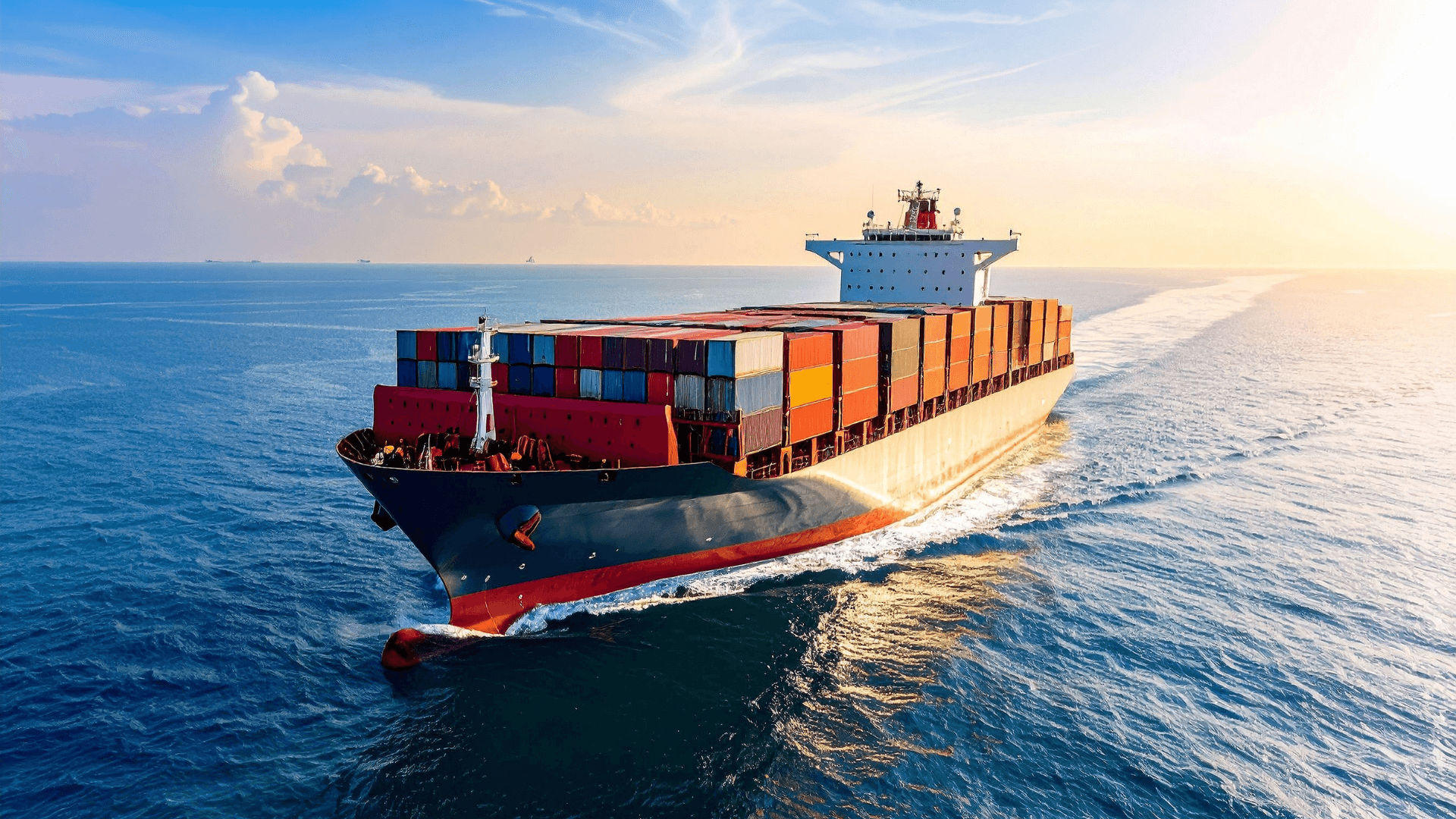
The European Commission published the 2025 annual maritime greenhouse gas emissions report (COM(2026) 173 final) in recent weeks. The report also covers data from 2024, the first year in which the European Union Emissions Trading System (EU ETS) was applied to the maritime sector.
Written by: Inci Hazal Kilic
The European Commission published the 2025 annual maritime greenhouse gas emissions report (COM(2026) 173 final) in recent weeks. The report also covers data for 2024, the first year in which the European Union Emissions Trading System (EU ETS) was applied to the maritime sector. I can say that it is a report that Turkish shipowners and operators working on EU routes should read; in my view, it is a concrete illustration of how decarbonization legislation directly intervenes in commercial operations.
Interpreting the 2024 Data
In 2024, approximately 12,700 ships entering and leaving ports in the European Economic Area (EEA) reached the highest emissions value recorded since the establishment of the MRV system and released 144.9 million tonnes of CO₂ into the atmosphere. This figure was 12.9% higher than in 2023 and 5.7% higher than in 2019. The non-CO₂ emissions reported for the first time were measured at 3.7 million tonnes of CO₂ equivalent (2.2 Mt N₂O, 1.6 Mt CH₄).
The Commission attributes much of the increase to the use of the Cape of Good Hope route instead of Suez following the Red Sea crisis. On a fleet basis, total distance increased by 9.3% and time spent at sea by 8.6%; the container segment generated an additional 16.7 Mt of CO₂, up 46%, and the share of emissions from non-EU voyages rose from 65.7% to 70.6%. However, the data do not point only to a geopolitical anomaly. Apart from container ships, 8 of the 14 ship types also recorded an increase in emissions compared with 2023, and MRV data show that there has been no structural decline in voyage speed across the fleet over 2018-2024. There is also no lasting transformation in the fuel mix. More than 91% of the total 46.8 million tonnes of consumption consisted of fossil-based maritime fuels, LNG accounted for 7.5%, and methanol, despite an annual increase of 428%, remained at only 0.1%.
The fact that 99% of the allowances corresponding to verified 2024 emissions were surrendered within the legal deadline is a positive compliance indicator; however, 2024 is the first year of gradual transition with only a 40% surrender obligation. I think the real stress test will be the 2026 reporting period, when the 100% obligation comes into force. We are entering a turning point in which operational capacity has developed, but the regulatory obligation will increase 2.5 times within two years, and the actual cash impact will approach about 3.5 times when the price effect is included.
Full Implementation and Scope Expansion
The maritime scope of the EU ETS has now reached a 100% obligation as of 1 January 2026, completing the transition that started with a 40% surrender rate in 2024 and 70% in 2025. As of the same date, CH₄ and N₂O emissions have also been included in the scope. Pursuant to Article 9 of the ETS Directive, the allowance cap was increased to a limited extent to cover maritime non-CO₂ emissions. In 2026, a total of 1,185,420,090 allowances will be issued for electricity and heat generation, industry and maritime sectors, while 24,903,076 allowances will be issued for aviation under a separate cap. From 2027, offshore ships above 5,000 GT will also enter the scope, and the Commission will assess expanding the system to ships between 400 and 5,000 GT during the 2026 review process. On intra-EU voyages, 100% of emissions are subject to the obligation, while on EU-third-country voyages, 50% of emissions are subject to it. According to the Commission's first ETS implementation report, if no efficiency measures are taken, the pass-through to average maritime costs for 2024 was projected at 3.7%. In 2026, this pass-through will inevitably grow significantly. Raising the scope from 70% to 100% will increase the EUA obligation by approximately 43% for the same emissions volume, while the inclusion of CH₄ and N₂O will add roughly 2.5% to the obligated emissions base. EUA prices have been highly volatile at the beginning of 2026: the EUA, which traded above 90 €/tCO₂ in January, fell below 70 € in mid-February after debates on ETS reform, and as of April it is trading around 75 €.
In parallel, Regulation (EU) 2023/1805, the FuelEU Maritime Regulation, has been fully applicable since 1 January 2025 and operates in a different way. Instead of allowance trading, it imposes a maximum limit on the annual average energy GHG intensity per ship on a well-to-wake basis. Compared with the 2020 fleet average reference value of 91.16 gCO₂e/MJ, intensity must decrease by 2% in 2025, 6% in 2030, 14.5% in 2035, 31% in 2040, 62% in 2045 and 80% in 2050. The regulation offers flexibility mechanisms such as banking, borrowing and pooling, and from 2030 it introduces a shore-side electricity connection (OPS) obligation for container and passenger ships in TEN-T ports. Under Article 23, in the event of non-compliance, a penalty calculated according to the Annex IV-B formula and applied at a fixed rate of €2,400 per tonne of VLSFO equivalent is imposed; from two consecutive periods onward, this penalty increases for n consecutive years by a factor of 1+(n-1)/10. The THETIS-MRV platform handles ETS and FuelEU reporting in an integrated manner.
It should be noted that the adoption of the International Maritime Organization's (IMO) Net-Zero Framework was postponed by 12 months, by 57 votes to 49 at the extraordinary MEPC session in October 2025, and the abstention of EU members with strong maritime interests also shows the limits of European bloc unity. Leaving the decision until October 2026 means that the EU ETS and FuelEU Maritime will remain the main binding maritime carbon regimes at the global level in the medium term.
Strategic Implications for the Turkish Fleet
The Turkish maritime sector faces a dual-layer compliance responsibility.
All Turkish-flagged ships above 5,000 GT operating voyages to EU ports are subject to EU ETS obligations, regardless of flag. One Member State is assigned as the administrative authority responsible for each company. Article 3gf of the ETS Directive defines a three-tier assignment rule: the country of registration for companies registered in the EU; for companies not registered in the EU, the Member State with the highest number of port calls in the last four monitoring years; and for unregistered companies that have never operated an EU voyage, the Member State where the first ETS-covered voyage started or ended. In practice, Turkish operators are assigned under the second or third rule. For the company, the basic steps are registration in the THETIS-MRV system, an approved monitoring plan, annual reporting with an accredited verifier, and the opening of a Maritime Operator Holding Account (MOHA) under the Union Registry, within 40 working days for those on the assignment list and within 65 working days after the first EU-covered voyage for those not on the list. Allowances must be surrendered for 50% of emissions on EU-Turkey voyages and for 100% on intra-EU voyages.
Under Additional Article 2 added to the Ports Law No. 618 by Law No. 7519, published in the Official Gazette dated 9 July 2024 and numbered 32597, a charge will be collected for verified greenhouse gas emissions from commercial ships entering and leaving Turkish ports for cargo or passenger handling purposes. The calculation of the charge will be based on the current EU ETS carbon price; the collected amounts will be recorded as special revenue in the general budget's (B) schedule, and the corresponding amount will be recorded in the budget of the Ministry of Transport and Infrastructure as a special appropriation for green shipping research, development, transformation and newbuild activities. Although the ship types to be included, tonnage thresholds and rates will be clarified by presidential regulation, the fact that the calculation reference is directly linked to the EU ETS carbon price shows the financial alignment of the national regime with the EU.
This framework reveals three strategic priorities:
i. upgrading the monitoring and reporting infrastructure to the ETS-FuelEU dual compliance standard (voyage-based fuel consumption, well-to-propeller intensity calculation, monitoring plan approval),
ii. structuring the EUA portfolio within a financial risk management discipline in the face of the price volatility described above, and establishing forward/option and pooling strategies,
iii. integrating alternative fuels (sustainable biofuel, e-methanol, ammonia) and energy efficiency investments (speed optimization, hull cleaning, air lubrication, wind-assisted propulsion) into medium-term fleet planning in high-exposure segments such as bulk and container shipping.
If you ask me, the way Turkish shipping companies can preserve their competitive continuity in the EU market is by positioning regulatory compliance not as a reactive cost item, but as a lever that secures access to decarbonized capital and continuity on EU routes.
I believe the next decade will be a period in which climate legislation will cease to be an ordinary item on the sector's balance sheet and become a strategic decision variable.

VCS (Verra) VMR0017 Update: A New Chapter for Renewable Energy Projects as Hydropower Exits and Solar, Wind Return
Under Verra, the ACM0002 (Grid-connected electricity generation from renewable sources) methodology, which is widely used in renewable energy projects, has been updated and replaced with VMR0017.
Read More

Scope Expansion in CBAM and Its Impact on Exporters in Turkiye
In December 2025, the European Commission published the draft regulation extending the Carbon Border Adjustment Mechanism (CBAM) to downstream products and introducing anti-circumvention measures (2025/0419(COD)).
Read More

The Scope 3 Dilemma and Leadership in Sustainability
Reporting of supply chain emissions is no longer just a goodwill gesture; it is becoming mandatory under international regulations, and in most companies these indirect emissions account for 70-90% of the total carbon footprint.
Read More


